

Artificial Intelligence (AI) has evolved from a futuristic concept into a core driver of transformation across industries. From intelligent chatbots and autonomous systems to advanced analytics and decision-making engines, AI is reshaping how organizations operate, compete, and deliver value. As we step further into the digital era, AI will not just enhance productivity but redefine how businesses and societies function.
The journey of AI began in the 1950s with simple rule-based systems designed to mimic human reasoning. Over time, advancements in computing power, data availability, and machine learning algorithms transformed AI from theoretical research to practical application. Today, we are in the age of deep learning and generative AI, where machines can recognize speech, analyze emotions, and even generate human-like text and art.
Generative Artificial Intelligence (Generative AI) is a subset of AI that uses machine learning models to generate new data that resembles human-created content. Unlike traditional AI, which recognizes patterns or makes predictions, Generative AI produces original and creative outputs.

AI enhances efficiency, reduces costs, and enables data-driven decision-making. Predictive analytics, automation, and chatbots transform productivity, though concerns like job displacement and workforce reskilling arise.
AI improves diagnosis, drug discovery, and patient care. It detects diseases early using imaging analysis and assists doctors in clinical decisions, reducing errors.
AI personalizes learning, analyzes student progress, and automates teacher tasks, making education more efficient and interactive.
Autonomous vehicles, smart traffic systems, and AI-driven logistics reduce congestion, improve safety, and optimize fuel usage.
Recommendation systems shape social interactions while raising concerns around privacy, bias, and data ethics.
The next decade will shift AI from automation to augmentation. Self-learning systems and quantum computing will unlock breakthroughs in medicine, climate modeling, and science. AI will become a strategic partner for companies focused on innovation and sustainability.
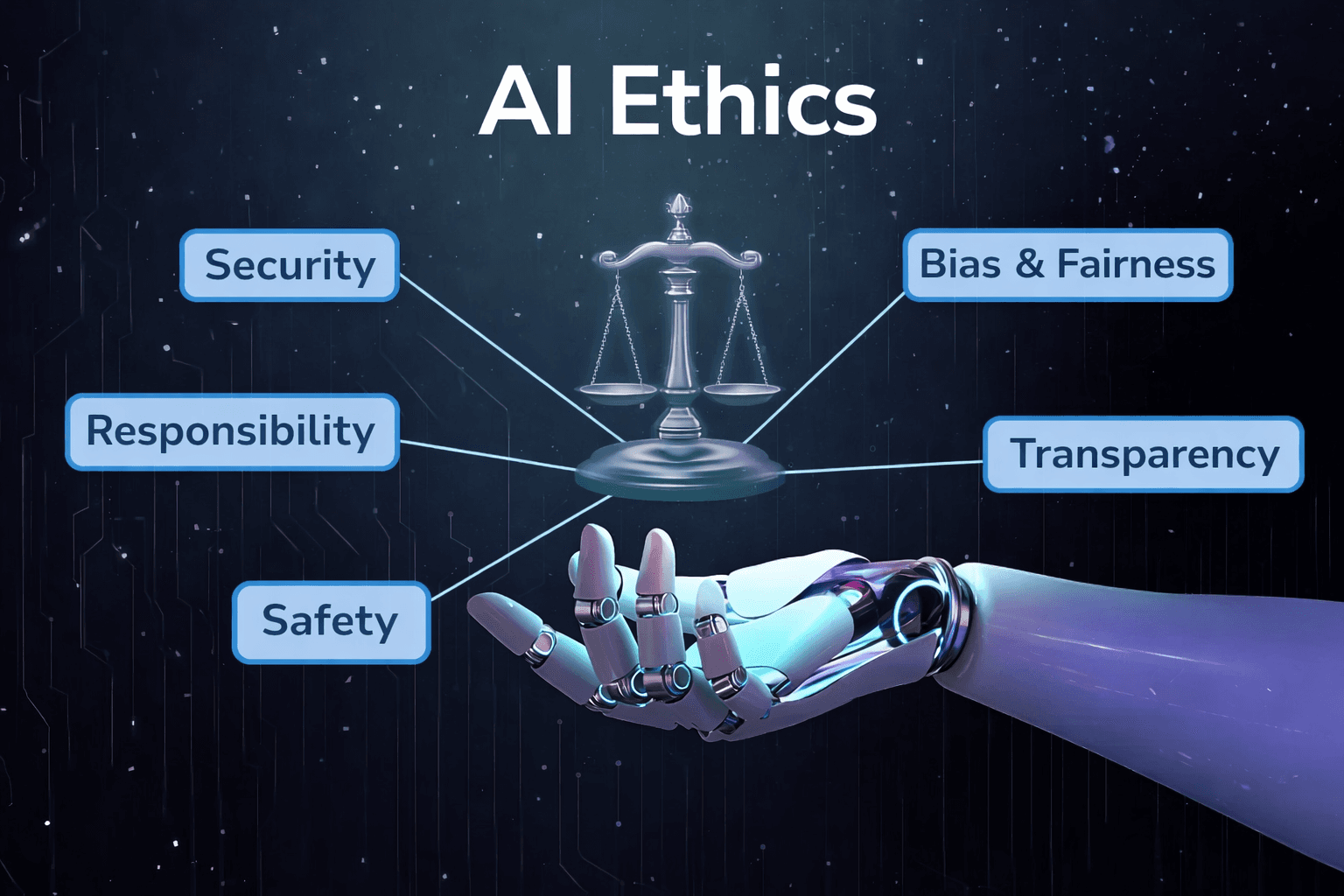
As AI becomes deeply integrated, ethics such as privacy, fairness, transparency, and accountability must guide its development. Trustworthy AI requires strong governance and responsible innovation.
The future of AI promises transformation across industries and society. Its full potential depends on using intelligence responsibly, with empathy and inclusivity. Companies balancing innovation with ethics will shape a future where humans and AI thrive together.


Developer

Developer

Developer

Developer
At Purple Sky Infotech, we’re dedicated to addressing your technology needs and providing top-notch services tailored to your business. Whether you have questions about our offerings or want to explore how we can help you achieve your goals, our team is here to assist you every step of the way.

CALL US FOR MORE DISCUSSION