PurpleSkyLogo

Blog Details

Home > BlogDetails

IoT (Internet of Things)

Smart Devices and the Internet of Things

Shivam Rathod

Shivam Rathod

4 Nov 2025

4 Nov 2025

Smart Devices and the Internet of Things

The Internet of Things (IoT) means everyday objects—like phones, watches, home appliances, and cars—connected to the internet. These devices have sensors and small software that help them collect and share information.

What is IoT?

IoT is a system where devices can communicate with each other with little or no human involvement.
  • ● A smart thermostat that controls home temperature automatically.
  • ● A fitness band that tracks your steps and sends health data to your phone.
Main Benefits of IoT

Main Benefits of IoT

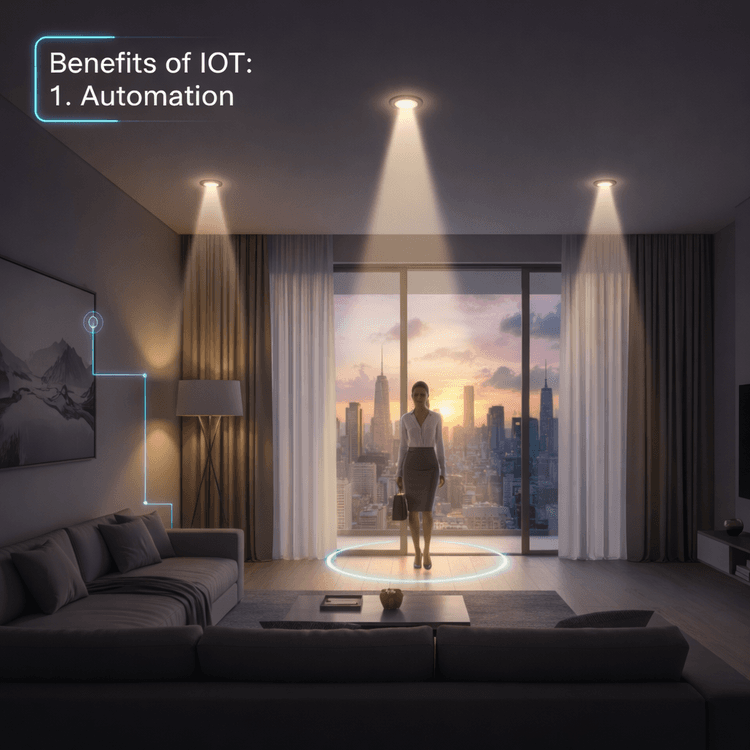
  • Automation – Devices work on their own, like smart lights turning on automatically.
  • Data Monitoring – Devices collect and report real-time data.
  • Energy Saving – Smart systems help reduce electricity usage.
  • Security – Smart cameras and alarms help protect homes.
Common Examples of IoT

Common Examples of IoT

  • Smart Homes: voice assistants, smart lights, automatic fans
  • Healthcare: fitness bands, heart-rate sensors
  • Agriculture: soil and weather sensors
  • Industries: machines sharing data to improve production
Challenges of IoT

Challenges of IoT

  • Data Privacy – More devices mean higher risk of data leaks.
  • Security – Devices can be hacked if not protected properly.
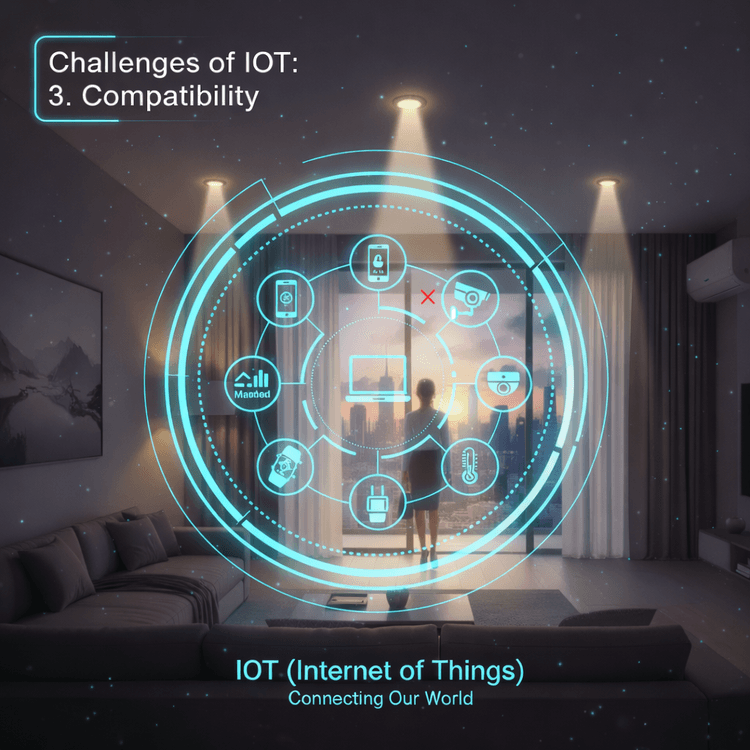
  • Compatibility – Devices need common standards to work together.
  • High Cost of Implementation – Setting up IoT systems and maintaining them can be expensive for small businesses.
Real-Life Uses of IoT

Real-Life Uses of IoT

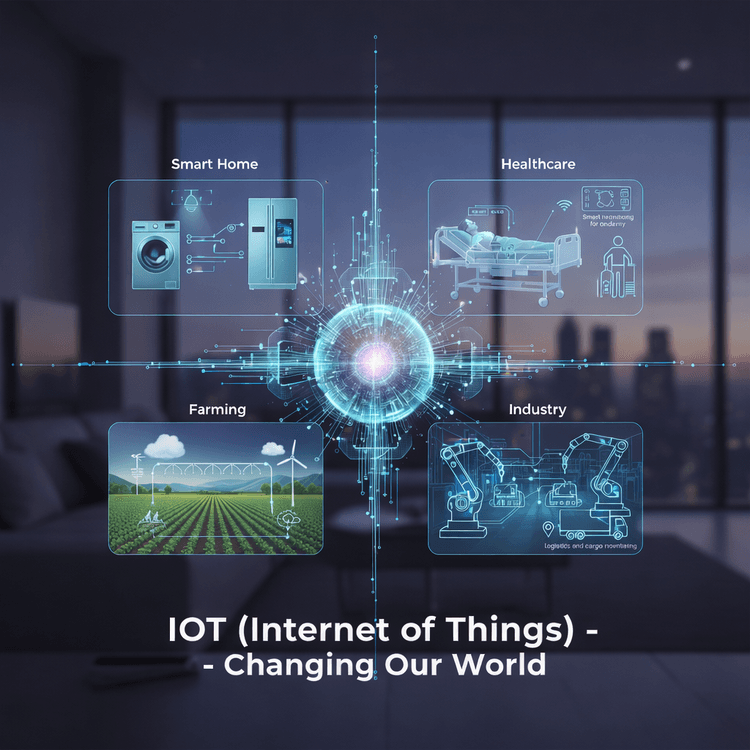
  • Home: smart washing machines, smart fridges, smart lighting
  • Healthcare: remote patient monitoring, elderly tracking
  • Farming: soil sensors, smart irrigation, weather monitoring
  • Business & Industry: factory monitoring, predictive maintenance
How IoT Works

How IoT Works

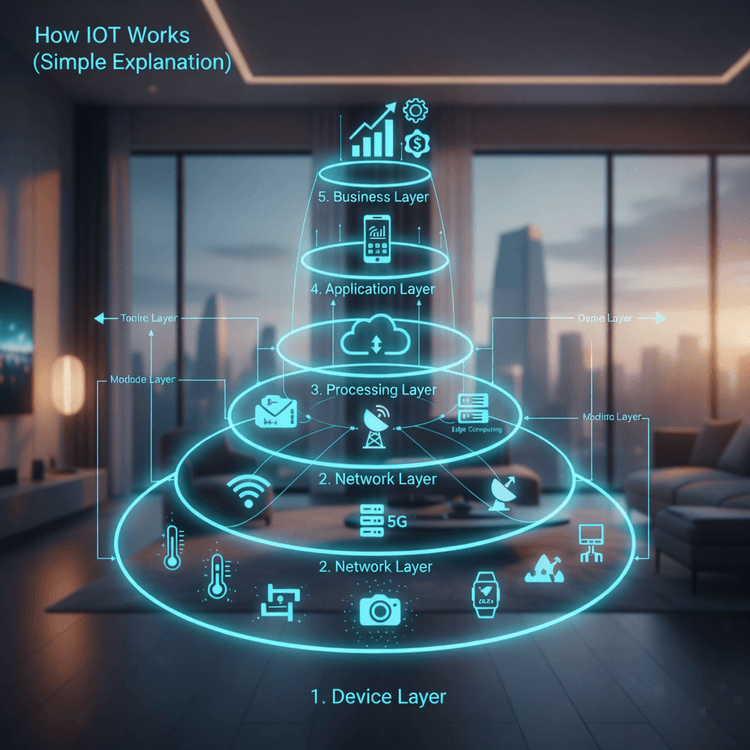
  • Device Layer – Sensors and devices collect data
  • Network Layer – Sends data via Wi-Fi, Bluetooth, or 5G
  • Processing Layer – Cloud or edge systems process it
  • Application Layer – Apps display data to users
  • Business Layer – Companies use data for insights

Conclusion

IoT is changing our world — making homes smarter, healthcare more efficient, farms more productive, and industries faster. However, as it grows, we must continue improving security, privacy, and compatibility to ensure safe and effective use.

Written by Shivam Rathod — Software Engineer, Purple Sky Infotech

Categories

AI & Creativity

01

Career & Development

01

Technology & Innovation

01

IoT (Internet of Things)

01

Apex

01

Lightning Web Components

01

E-CommercePlatform

01

Computer Network

01

Artificial Intelligence (AI)

01

Web Development

01

Tags

AI & Creativity

Career & Development

Technology & Innovation

IoT (Internet of Things)

Apex

Lightning Web Components

E-CommercePlatform

Computer Network

Artificial Intelligence (AI)

Web Development

edit-iconfacebook-icontwitter-iconinstagram-iconprintest-icon

See related posts

background-img
Hire-icon

Hire

Developer

Web-icon

Web

Developer

Open Source-icon

Open Source

Developer

Mobile App-icon

Mobile App

Developer

Contact Purple Sky Infotech to discuss your tech needs or claim our services.

At Purple Sky Infotech, we’re dedicated to addressing your technology needs and providing top-notch services tailored to your business. Whether you have questions about our offerings or want to explore how we can help you achieve your goals, our team is here to assist you every step of the way.

call-icon

CALL US FOR MORE DISCUSSION

+91 74708-18588